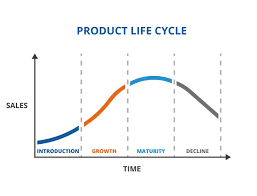
User-centered design has long emphasized usability, accessibility, and efficiency as core principles for creating effective products. It focuses on understanding users’ needs, goals, and limitations in order to optimize interactions between users and systems. However, as products become increasingly embedded in everyday life, these conventional metrics are no longer sufficient. They need to change with the evolvement of the products. The concept of product lifestyle offers an expanded perspective, making products not simply as tools for task completion as they once were, but now as long-term companions that shape experiences of the users. When integrated into a user-centered design framework, product lifestyle broadens the scope of design inquiry to include many more aspects.
Product lifestyle refers to the way a product continuously fits into the daily routines, personal identities, social contexts, and life stages of the customer. Unlike traditional usability considerations, which often evaluate interaction in discrete moments, product lifestyle emphasizes continuity and evolution. From the lens of user-centered design, this shift is significant. There has been a reframing of the user not as a static persona, but as an individual whose needs, behaviors, and values are fluid. Designing with product lifestyle in mind therefore requires designers to engage with users’ long-term patterns rather than isolated use cases.
Product lifestyle thinking is also evident in physical product ecosystems, such as those developed by IKEA. IKEA’s design strategy frequently centers on monumental points of their customers’ lives—moving into a first apartment, starting a family, or adapting to smaller living spaces. Modular furniture systems, flat-pack designs, and incremental affordability reflect an understanding that users’ circumstances are fluid. This aligns with user-centered design principles by acknowledging constraints such as budget, space, and mobility. However, IKEA also exposes a critical tension within product lifestyle design. While the products support adaptability and accessibility, critics argue that the company’s reliance on mass production and short product lifespans undermines sustainability.
Failures in product lifestyle design often occur when designers rely on assumptions rather than actual research. Many health and productivity applications, for instance, are built around idealized users who are consistently motivated and disciplined. While such products may perform well in usability testing, they frequently fail in real-world adaptation. Users abandon them when life tends to interfere with intended behaviors. This disconnect demonstrates that a product can be user-friendly yet fundamentally misaligned with users’ lived realities. A genuinely user-centered approach to product lifestyle would require studying all different demographics of people to account for all possibilities.
From a critical perspective, product lifestyle should be viewed not merely as a strategic design advantage, but as an ethical responsibility. Products increasingly influence how users divide their attention, form habits, and define personal success. Designers who neglect the lifestyle implications of their products risk contributing to overconsumption, digital dependency, or user burnout. Thoughtful product lifestyle design can promote well-being, sustainability, and long-term trust between users and products.
Product lifestyle represents an important evolution of user-centered design. It extends the designer’s responsibility from optimizing interactions to understanding long-term human experience. By accounting for change, contextual complexity, and ethical consequences, designs specifically focused on product lifestyle move beyond functionality toward meaningful integration in users’ lives. As products continue to shape everyday behavior, incorporating product lifestyle is vital to staying ahead of the competition.
 From Nockmaar to Tir Asleen
Leave a comment